
Brazil, 25th of September 2026
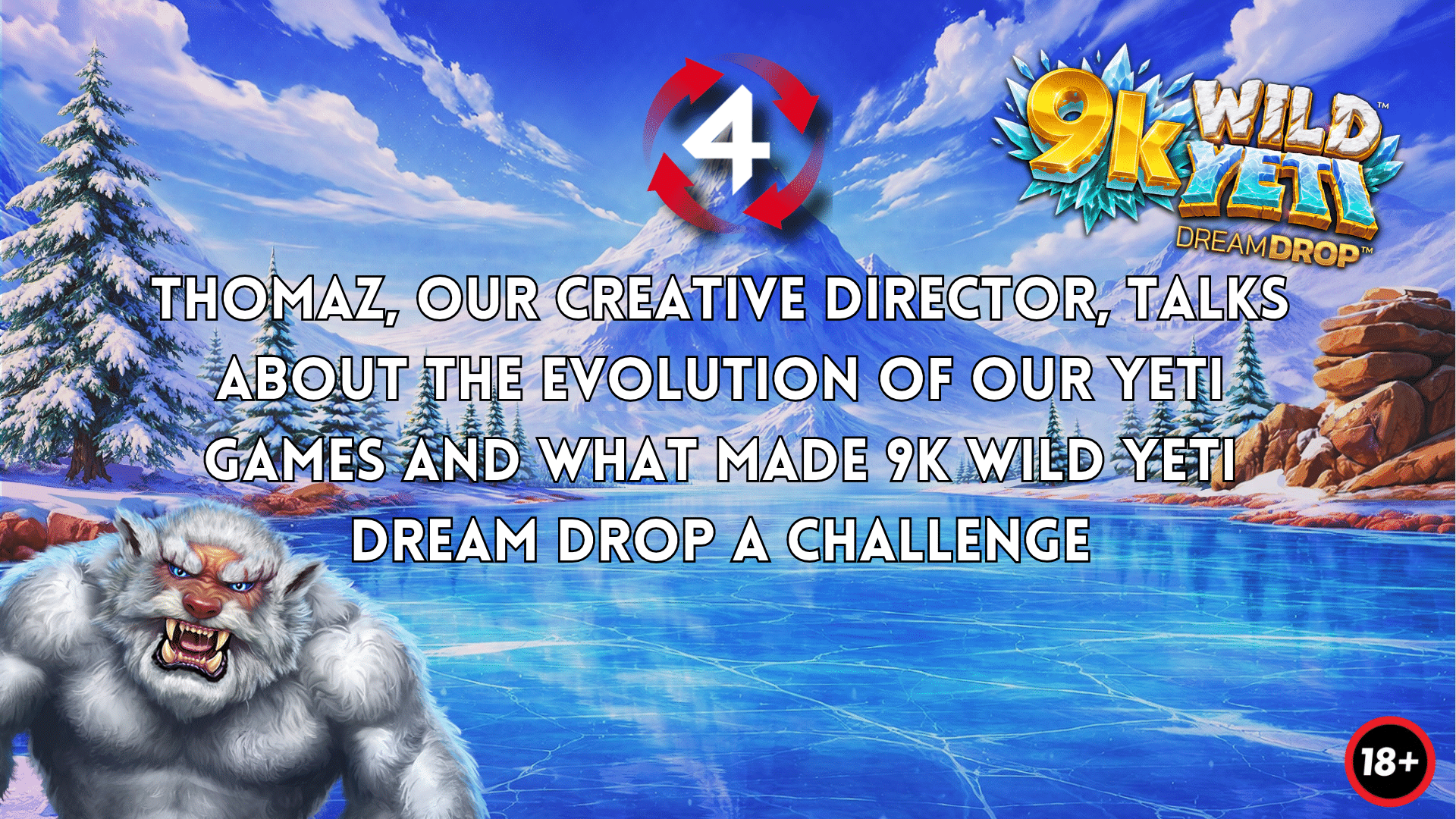
Today, we sat down with our Art Director and Co-Founder, Thomaz Scalzilli, to talk all things 𝟵𝗞 𝗪𝗶𝗹𝗱 𝗬𝗲𝘁𝗶 𝗗𝗿𝗲𝗮𝗺 𝗗𝗿𝗼𝗽 and how our Yeti has evolved over the last 7 years.
Yeti was the first game you worked on; it must feel really rewarding to see how loved it is and how long it has stuck around. It is truly something to be proud of. Why do you think this theme has resonated so strongly with players, and what made our Yeti work so well?
Thomaz: When we started working on this game, we were looking for a theme that evoked a sense of wonder and mystery. The Yeti seemed like a perfect fit because it is a strong, mythical character that is surrounded by interesting folklore and well-known worldwide. We believe that the player’s curiosity on the theme and simple, engaging gameplay mechanics would be the perfect fit for the game and our players.
With trends ever evolving, we noticed that the Yeti has also had a glow-up recently. How would you say your style has evolved over the years from sequel to sequel, and what led to this change?
Thomaz: It’s a natural progression. It’s been eight years since we designed the first game, and with each sequel, we’ve always tried to introduce something new and interesting. The Yeti was part of that evolution. The biggest challenge was figuring out how to improve the character and make it feel fresh while still preserving the core design elements that made it recognisable in the first place.
From sketchboard to the final in-game design, can you explain a little bit about the process of making a Yeti sequel and what work is involved in it?
Thomaz: The starting point is usually figuring out what can be improved while keeping the core characteristics that make the game recognisable. From there, we do a lot of research and quick testing to explore different ideas and find ways to make the game feel fresh and new. Once we land on a specific direction, we start building on that idea and developing it further.
How many designers are included in the process of making a Yeti sequel, and how do you make sure that it stays exciting for them?
Thomaz: The number of designers really depends on the scope of the project, but we always try to have a mix of experienced and newer designers on the team. Every Yeti game brings a new challenge, and having the creative freedom to explore and propose new ideas makes the process especially exciting.
Now, five sequels in, it must be more challenging to innovate the game’s design and keep it fresh. Can you tell us a little bit about the challenges of making 9K Wild Yeti Dream Drop and something that made this sequel memorable to you?
Thomaz: The merged and expanded Yeti symbol variants were a big challenge to get right, but they were also incredibly rewarding because they look great in the game. There’s something really exciting about hitting those Yeti wins and watching them grow into a full-size Yeti across the reels.
If you and your team had to pick one, which would be the Yeti game that you had the most fun working on?
Thomaz: It’s difficult to pick just one, but I’d say the newest Yeti game is always the most fun because it brings new challenges, new ideas, and improvements to build on. So, in this case, I’d have to say 9K Wild Yeti!
Finally, what is something you’d like to see the Yeti doing in the future and why?
Thomaz: We’ve already worked on a few crossovers, like 4 Fantastic Vikings Go Fishing, and it was a lot of fun. The crossover worked so well that we’re now working on a spin-off called 4 Fantastic Vikings Hold the Gold. I think a crossover between Yeti and our 4 Fantastic Fish games could be a lot of fun too. There’s a lot of potential to combine the two worlds and come up with something really unique.










Leave A Comment